

Stephen Greenblatt, The Telegraph
June 7, 2014
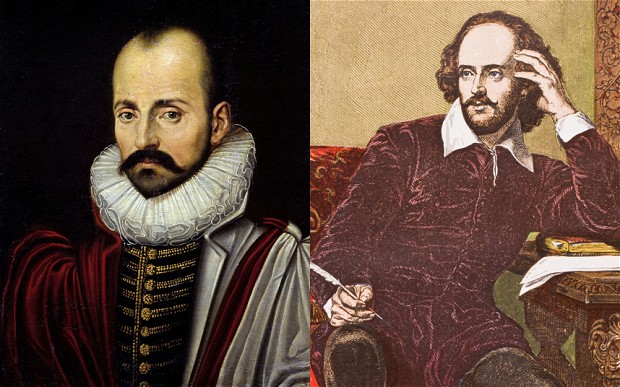
One wrote essays to be read in private, the younger wrote plays for the public; both turned uncertainty into art.
When, near the end of his career, Shakespeare wrote The Tempest, the tragicomic romance that seems at least in retrospect to signal his impending retirement to Stratford, he had in his mind and quite possibly on his desk a book of Montaigne’s Essays. One of those essays, “Of the Cannibals,” has long been recognized as a source upon which Shakespeare was clearly drawing.
The playwright had some degree of acquaintance with French culture and language. Yet close attention to the allusions in The Tempest and elsewhere makes clear that Shakespeare read Montaigne not in French but in an English translation. That translation, published in a handsome folio edition in London in 1603, was by John Florio. For Shakespeare — and not for Shakespeare alone but for virtually all of his English contemporaries – Montaigne was Florio’s Montaigne. His essays, in their rich Elizabethan idiom and wildly inventive turns of phrase, constitute the way Montaigne spoke to Renaissance England. […continued]
Read Full Story
 0
0 0
0 0
0 0
0
Comments